

260 million yuan in funding! Norway will build the world's largest battery electric boxship
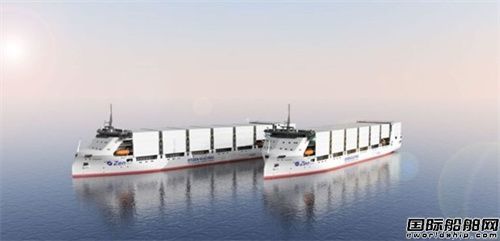
Recently, the Norwegian government enterprise Enova decided to allocate 362 million Norwegian Krone (approximately 262 million RMB) to support the construction of 7 electric vessels and 4 charging facilities.
Among them, Eitzen Avanti received 200 million Norwegian Krone in funding to build two 850TEU battery-powered container ships. Each ship will be equipped with a battery pack exceeding 100 megawatt-hours and is expected to become one of the "world's largest" battery-electric container ships, engaged in cargo transportation between Norway, Sweden, and Germany.
Fridtjof C. Eitzen, CEO of the Eitzen Group, pointed out: "We see the huge potential for electrification in regional shipping. Over the past decade, battery prices have fallen by more than 80%, and they will continue to fall in the future. Electric ships are like an unstoppable train, and will gradually become the most cost-effective way of transporting goods by sea."
Meanwhile, Polar Energy Shipco also received funding to build a fully electric bulk carrier for transporting minerals along the Norwegian coast. The ship is equipped with a rotor sail and a battery pack exceeding 20 megawatt-hours, enabling fully electric operation. Brim Explorer will build two electric sightseeing boats. The new ships are equipped with approximately 3 megawatt-hour batteries and adopt multiple energy-saving technologies, operating on routes such as Ålesund to Geiranger.
Lovundlaks received funding to build two electric workboats and two supporting onshore charging facilities. GC Rieber Minerals will build a charging station in Laksevågneset.
In addition, the Oslo Port Authority received 20.6 million Norwegian Krone in funding to build ship charging facilities at the Sjursøya container terminal. Ingvar M. Mathisen, Port Director, said: "Oslo Port's vision is to become the world's most efficient and environmentally friendly city port. Enova's support is crucial to achieving our ambitious climate goals."
Enova estimates that these projects will reduce approximately 20,836 tons of carbon dioxide equivalent emissions annually, taking an important step towards a zero-carbon shipping society.
Andreas Forsnes Jahn, Senior Advisor for Maritime Affairs at Enova, said: "These projects demonstrate the feasibility of battery electrification in the shipping industry in different ways. The technology is now mature, and the projects are feasible. If the electrification of car ferries is the first wave, we hope this can be the beginning of the second wave of electrification of near-shore shipping."
Related News
Ministry of Foreign Trade
Fixed line:0553-2111515
E-mail (E-mail):licheng@wuhupa.com
Address: Xu Town Industrial Park, Wuhu City, Anhui Province
Public Number
Micro-blog
Tiktok
Copyright©2022 Wuhu Ping'an Rubber Co., Ltd. All Rights Reserved Website Construction:www.300.cn Nanjing SEO