

Return to Chinese Shipyards! European Shipping Giant's New Shipbuilding Plan Faces New Uncertainties
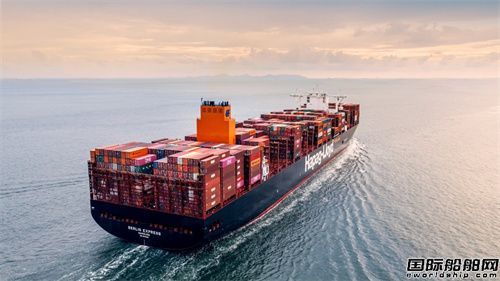
Hapag-Lloyd, the world's fifth-largest container shipping company, has encountered further setbacks in its latest large-scale container ship ordering plan. The order, originally intended for Chinese shipbuilders, was temporarily shifted to South Korea due to proposed "exorbitant" port fees from the United States. Now, with policy easing and cost advantages becoming apparent, Hapag-Lloyd is refocusing its attention on Chinese shipbuilders.
According to foreign media reports, Hapag-Lloyd initially planned to order up to 12 12,500TEU and 6-8 16,000TEU container ships from Chinese shipbuilders. Initial contacts were made with Yangzijiang Shipbuilding and New Times Shipbuilding, companies with which Hapag-Lloyd had signed construction contracts and had optional ship orders last year. However, in February this year, after the Office of the United States Trade Representative (USTR) released a Section 301 proposal claiming to impose high port fees on ships built in China, Hapag-Lloyd's new ship negotiations shifted to South Korean shipbuilders, including Hanwha Ocean (formerly Daewoo Shipbuilding & Marine Engineering), with whom the company had previously collaborated, and HD Hyundai, South Korea's largest shipbuilding group.
Earlier this year, Hapag-Lloyd signed a letter of intent with Hanwha Ocean for the construction of six 16,000TEU dual-fuel LNG-powered container ships, valued at over US$1.2 billion (approximately RMB 8.645 billion). The letter of intent between Hapag-Lloyd and Hanwha Ocean is non-binding and only sets a timeframe for order discussions. This letter of intent has yet to be converted into a formal order.
Recently, it has been reported that Hapag-Lloyd has resumed negotiations with Yangzijiang Shipbuilding for an order of six 16,000TEU dual-fuel LNG-powered container ships. These six ships were originally optional orders from the 12 identical ships Hapag-Lloyd signed with Yangzijiang Shipbuilding last year.
Experts point out that Hapag-Lloyd's strategic shift is influenced by the dual impact of the US easing fees on ships built in China and rising prices from South Korean shipbuilders.
In mid-April this year, the USTR announced a revised Section 301 proposal, easing fee standards. It canceled the previously proposed fixed fee of US$1 million to US$1.5 million per port call for operators using a high proportion of Chinese-built ships, and also canceled the fees proposed for future orders from Chinese shipyards.
According to the USTR's latest proposal, for each ship built in a Chinese shipyard, regardless of the shipowner/operator's nationality, fees will be levied per net ton or per container unloaded (whichever is higher). The initial fee standard is US$18 per net ton, increasing to US$33 by 2028; or US$120 per container, increasing to US$250 by 2028.
After the USTR released its initial draft at the end of February, new ship orders from Chinese shipyards stalled, and new ship prices fell. In March, the monthly order volume of Chinese shipbuilders even fell behind South Korea, dropping to second place globally. With the USTR's release of the revised plan, stalled order negotiations between shipowners and Chinese shipyards quickly restarted. In April, the order volume of Chinese shipbuilders once again significantly led, successfully winning nearly 70% of global new ship orders.
In addition to US policy factors, the price competitiveness of Chinese shipbuilders is also a major attraction for Hapag-Lloyd. Sources say that the prices quoted by South Korean shipbuilders are significantly higher than those of China. For 12,500TEU dual-fuel LNG-powered ships, Chinese shipbuilders quoted around US$130-135 million, while South Korean shipbuilders quoted approximately US$20 million more. For 16,000TEU dual-fuel LNG-powered ships, Chinese shipbuilders quoted around US$190 million, while South Korean shipbuilders quoted close to US$225 million, 18% higher than Chinese shipbuilders.
For reference, Clarksons' data shows that the current price of a new 10,000/11,500TEU dual-fuel LNG-powered container ship is approximately US$143 million, while a 15,000/16,000TEU dual-fuel LNG-powered ship is approximately US$202 million.
Related News
Ministry of Foreign Trade
Fixed line:0553-2111515
E-mail (E-mail):licheng@wuhupa.com
Address: Xu Town Industrial Park, Wuhu City, Anhui Province
Public Number
Micro-blog
Tiktok
Copyright©2022 Wuhu Ping'an Rubber Co., Ltd. All Rights Reserved Website Construction:www.300.cn Nanjing SEO