

A total of 12 vessels! Mitsui O.S.K. Lines orders additional VLGCs.
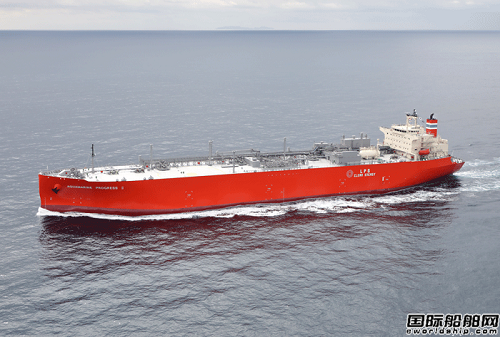
Japan's Mitsui O.S.K. Lines (MOL) has placed orders for 6 VLGCs at two Japanese shipyards, doubling its VLGC newbuilding orderbook to 12 vessels.
According to TradeWinds, MOL's order for these 6 VLGCs was split, with Kawasaki Heavy Industries (KHI) taking 4 vessels and Namura Shipbuilding securing 2 vessels. The related shipbuilding contracts were signed last year but had not been announced until now. As planned, KHI will deliver 1 vessel in 2027 and 3 vessels in 2028; Namura Shipbuilding's 2 vessels are scheduled for delivery in 2027.
The specific newbuilding costs are currently not confirmed. For reference, Clarkson data shows that the current newbuild price for an 88,000-91,000 cbm VLGC is approximately US$120 million, largely unchanged from US$119.5 million in the same period last year.
This is Namura Shipbuilding's first VLGC order in the past three years. It is understood that Namura Shipbuilding first entered the VLGC market in 2021 with an order from MOL. However, after securing 2 VLGC orders from MOL in 2021 and 2022, the shipyard had not received any further VLGC orders. The two 87,100 cbm VLGCs built for MOL, 'Phoenix Harmonia' and 'Aquamarine Progress II', were delivered in 2023 and 2024 respectively.
Including the latest orders, MOL currently has 12 VLGCs under construction. According to Clarkson data, MOL successively ordered 6 VLGCs between 2023 and 2024, with HD Hyundai Heavy Industries, HD Hyundai Samho, and Hanwha Ocean in South Korea each receiving 2 vessels.
Among these 12 VLGCs, the two 88,000 cbm VLGCs 'Energia Grandeur' and 'Energia Soleil', being built by HD Hyundai Samho, are intended for a time charter contract with CSSA Chartering & Shipping Services, a subsidiary of TotalEnergies, and are expected to be delivered next year.
The remaining 10 new vessels are forward-looking investments by MOL based on anticipated global LPG demand growth and Japan's Green Transformation (GX) strategy, which aims to achieve Japan's 2050 net-zero emissions target. Multiple reports indicate that to reduce CO2 emissions, Japan will significantly increase synthetic ammonia imports in the future, with annual import volumes projected to rise from the current 1 million tons to 3 million tons by 2030 and 30 million tons by 2050.
The Japanese government plans to apply ammonia energy to thermal power plants, aiming to increase the ammonia co-firing ratio in coal-fired power plants to over 50% by 2030, and to develop 100% ammonia-fueled gas turbines. Simultaneously, the Japanese government is committed to building domestic and international supply chain systems, striving to achieve an annual ammonia fuel transport capacity of 100 million tons by Japanese companies by 2050.
Including MOL's latest orders, Clarkson data shows that Kawasaki Heavy Industries currently has a total orderbook of 13 vessels, amounting to 728,000 DWT, all of which are 86,700 cbm VLGCs, with delivery schedules extending to 2028. Namura Shipbuilding's current orderbook totals 24 vessels of approximately 2.7209 million DWT, including 22 bulk carriers and 2 LPG carriers, with delivery schedules extending to 2028.
Related News
Ministry of Foreign Trade
Fixed line:0553-2111515
E-mail (E-mail):licheng@wuhupa.com
Address: Xu Town Industrial Park, Wuhu City, Anhui Province
Public Number
Micro-blog
Tiktok
Copyright©2022 Wuhu Ping'an Rubber Co., Ltd. All Rights Reserved Website Construction:www.300.cn Nanjing SEO