

Five major shipyards have received orders totaling 770 billion! South Korea's shipbuilding industry continues to receive high-priced orders.
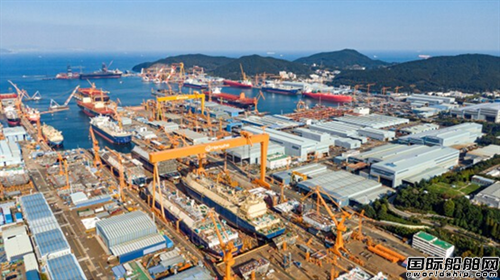
By the end of the first quarter of this year, the total value of orders held by South Korea's five major shipyards—HD Hyundai Heavy Industries Ulsan shipyard under HD Hyundai Shipbuilding & Offshore Engineering, HD Hyundai Mipo Dockyard, HD Hyundai Heavy Industries, Samsung Heavy Industries, and Hanwha Ocean (formerly Daewoo Shipbuilding & Marine Engineering)—had exceeded US$100 billion.
With the start of mass delivery of high-priced LNG carriers, improved production stability, and increased exports of marine equipment, the profitability of South Korea's shipbuilding industry is being strengthened from multiple dimensions. The ample order backlog gives shipyards an advantage in price negotiations with ship owners, allowing them to gain more initiative in securing high-priced ship orders.
The "Second Half Industry Outlook" report released by the Korea Institute for Industrial Economics on June 19th predicts that South Korea's shipbuilding exports will increase by 10.2% year-on-year this year. Industry analysts point out that high-priced LNG carriers secured by South Korean shipbuilders between 2020 and 2022 are entering a concentrated delivery phase. These high-value-added vessels have an average price of approximately US$250 million per ship, which will significantly boost export figures. Currently, South Korea's three major shipbuilders, HD Hyundai Shipbuilding & Offshore Engineering, Samsung Heavy Industries, and Hanwha Ocean, account for over 70% of the global LNG carrier market. The accelerated order delivery schedule and high shipyard utilization rates are creating a synergistic effect, further solidifying the foundation for South Korea's shipbuilding export performance.
On the production side, the improved skills of newly hired workers and production efficiency optimization have yielded significant results for South Korean shipbuilders. Statistics from the Korea Institute for Industrial Economics show that South Korea's shipbuilding completion volume increased by 16.9% year-on-year in the first half of this year. Although the output of some ship types may decline slightly in the second half of the year, the annual shipbuilding completion volume is still expected to achieve a 5.0% increase. Simultaneously, the shipbuilding supporting industry is also a driving force behind the expansion of South Korea's shipbuilding exports. With the continued rise in overseas demand for high-end supporting products such as LNG-related core equipment and environmentally friendly ship engines, the performance improvement prospects for related SMEs are strong.
In terms of strategic layout, while maintaining a business strategy focused on high value-added ship types, South Korean shipbuilders are accelerating the expansion of their special ship (military ship) business. As negotiations progress with HD Hyundai Heavy Industries and Hanwha Ocean on US Navy vessel maintenance, repair, and overhaul (MRO) projects and export vessel orders, new revenue growth points are gradually emerging.
Kiwoom Securities pointed out that as of the end of the first quarter of this year, the five major South Korean shipyards held orders totaling approximately 147 trillion won (approximately US$107 billion, 770 billion RMB), a 1.3% increase from the end of last year, with their workload saturated for the next three years.
This is verified by the order intake of South Korean shipbuilders this year. On January 20th, HD Hyundai Heavy Industries received an order for 12 LNG dual-fuel 15,500 TEU container ships from CMA-CGM, with a unit price of approximately US$240 million, US$18 million higher than the US$222 million unit price of the first batch of the same type of ships signed between HD Hyundai Heavy Industries and CMA-CGM in July last year.
On April 17th, HD Hyundai Mipo Dockyard received an order for two medium-sized LPG/ammonia carriers from Nieto Trading, the Dutch subsidiary of Grupo Nieto in Mexico, with a unit price of US$81.5 million, US$3.7 million higher than the price of four medium-sized 45,000 cubic meter LPG/ammonia carriers HD Hyundai Mipo Dockyard received from the Greek ship owner Evangelos Marinakis in April last year.
On May 23rd, HD Hyundai Mipo Dockyard received an order for two 18,000 cubic meter LNG bunkering vessels from the Spanish shipping company IBAIZABAL. The delivery time is one year earlier than the construction contract for four vessels of the same type signed with the Greek ship owner Evalend Shipping in February this year, and the unit price has also increased by approximately US$6.2 million (approximately RMB 44.5 million).
Hanwha Ocean has also recently received a batch of new ship orders at prices significantly higher than the market average. In mid-March, the company received an order for six LNG dual-fuel 24,000 TEU ultra-large container ships from Evergreen Marine Corporation in Taiwan, with a unit price of approximately US$267 million, exceeding the market average and setting a new industry high.
On April 1st, Hanwha Ocean signed a construction contract with Capital Group of Greece for two VLCCs, with a total contract value of approximately 378.4 billion won (approximately US$258 million), and a unit price of approximately US$129 million; on April 28th, Hanwha Ocean signed another construction contract with Advantage Tankers of Switzerland for two VLCCs, with a total contract value of 371 billion won (approximately US$257 million), and a unit price of approximately US$128.5 million. The signing prices of these four new ships are significantly higher than the US$125 million new VLCC price released by Clarksons.
Kiwoom Securities also pointed out that with the increase in special ship (military ship) orders and the significant improvement in production efficiency at various shipyards, a positive synergistic effect has been created. It is expected that the performance improvement of major South Korean shipyards will continue in the second half of this year, and the export growth trend centered on high value-added ship types will also continue, driving South Korea's shipbuilding exports to grow by more than 10% for the whole year.
Lee Eun-chang, a research fellow at the Korea Institute for Industrial Economics, said: "Although the shipping market may weaken in the future, South Korea's shipbuilding industry, thanks to its solid performance in the LNG carrier sector and the indirect benefits from the US's restraint on China's shipbuilding industry, will see a slowdown in the decline of order volume."
South Korean industry insiders further pointed out: "High value-added LNG carrier orders are an important support for South Korea's shipbuilding export performance. In the second half of this year, various shipyards will continue to consolidate their profitability through stable shipyard operations and production efficiency guarantees."
Related News
Ministry of Foreign Trade
Fixed line:0553-2111515
E-mail (E-mail):licheng@wuhupa.com
Address: Xu Town Industrial Park, Wuhu City, Anhui Province
Public Number
Micro-blog
Tiktok
Copyright©2022 Wuhu Ping'an Rubber Co., Ltd. All Rights Reserved Website Construction:www.300.cn Nanjing SEO