

200 billion orders hit a new record high! Chinese shipyards lead the green wave
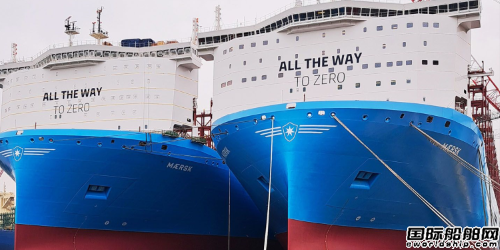
A green tide is surging in the global shipbuilding market! In the first four months of this year, global orders for alternative fuel vessels reached 165, with a total order value of nearly 200 billion yuan, accounting for 63% of total new ship orders and setting a historical high. This shows that the global shipping industry is accelerating its transition to a new stage of low-carbon transformation, with Chinese shipyards leading the way.
According to the latest statistics from Clarkson, among the total of 372 new ship orders with a total tonnage of 23.9 million in the first four months of this year, 165 vessels with a total tonnage of 15.2 million were alternative fuel vessels, accounting for 63%, exceeding the 47% of last year and higher than the record-breaking 54.6% in 2022. In terms of order value, the total investment in global new shipbuilding in the first four months was US\$43 billion, with the order value of alternative fuel vessels reaching US\$26.8 billion (approximately RMB 192.97 billion), a year-on-year decrease of 30%, accounting for 62.3%.
This year's alternative fuel vessel orders include 78 LNG-powered vessels with a total tonnage of 10.6 million, 38 methanol-powered vessels with a total tonnage of 4.1 million, and 55 battery/hybrid propulsion vessels with a total tonnage of 1 million.
In recent years, the proportion of alternative fuel vessels in new ship orders has been rising steadily, from 8.2% in 2016 to 32% in 2021, reaching a record high of 54.6% in 2022. After a slight dip to 41% in 2023, it rebounded to 47% in 2024.
In terms of shipyards by country, Clarkson's data shows that in April 2025, the vast majority of alternative fuel new ship orders were undertaken by Chinese shipyards, totaling 32 vessels with 1.998 million CGT, accounting for 68.3% of alternative fuel new ship orders in April 2025 by CGT, ranking first globally. Meanwhile, South Korean shipyards undertook 8 alternative fuel new ship orders with 322,000 CGT in April, with a market share of 11%. Japanese shipyards undertook 4 alternative fuel new ship orders with 140,000 CGT in April, with a market share of 4.8%.
The 32 vessels with 1.998 million CGT of alternative fuel new ship orders undertaken by Chinese shipyards in April 2025 included 23 methanol dual-fuel vessels with 1.47 million CGT, 8 LNG dual-fuel vessels with 514,000 CGT, and 1 battery/hybrid propulsion vessel with 14,000 CGT; the 8 vessels with 322,000 CGT of alternative fuel new ship orders undertaken by South Korean shipyards included 5 LNG dual-fuel vessels with 261,000 CGT and 3 LPG dual-fuel vessels with 62,000 CGT; the 4 vessels with 140,000 CGT of alternative fuel new ship orders undertaken by Japanese shipyards included 3 methanol dual-fuel vessels with 130,000 CGT and 1 hydrogen dual-fuel vessel with 10,000 CGT.
According to Clarkson's data, overall, in terms of tonnage, the proportion of vessels in the currently operating fleet that can use alternative fuels or propulsion systems has increased to 8.2%, higher than 2.6% in 2017 and 6.4% at the beginning of 2024. Among the existing total of 2356 alternative fuel vessels, there are 1372 LNG-powered vessels, 58 methanol-powered vessels, 139 LPG-powered vessels, 681 battery/hybrid propulsion vessels, and 252 vessels using other fuels.
Related News
Ministry of Foreign Trade
Fixed line:0553-2111515
E-mail (E-mail):licheng@wuhupa.com
Address: Xu Town Industrial Park, Wuhu City, Anhui Province
Public Number
Micro-blog
Tiktok
Copyright©2022 Wuhu Ping'an Rubber Co., Ltd. All Rights Reserved Website Construction:www.300.cn Nanjing SEO