

SCFI has fallen for nine consecutive weeks! Peak season is not strong, and shipping rates are falling across the board.
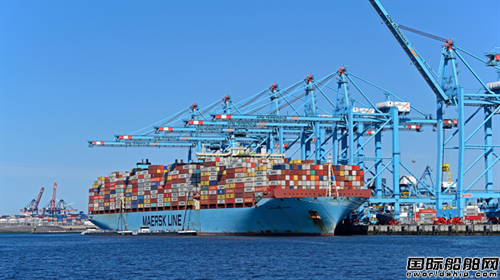
The peak season for the container shipping market is not performing well, with the Shanghai Containerized Freight Index (SCFI) falling for nine consecutive weeks.
According to the latest data released by the Shanghai Shipping Exchange on August 8, the SCFI index fell 61.06 points last week to 1489.68 points, a weekly decrease of 3.94%. All four major ocean routes fell, with the East Coast of the United States route experiencing the largest decline.
Last week, the Far East to US West Coast freight rate fell by US\$198 to US\$1823 per FEU, a weekly decrease of 9.79%; the Far East to US East Coast freight rate fell by US\$334 to US\$2792 per FEU, a weekly decrease of 10.68%; the Far East to Europe freight rate fell by US\$90 to US\$1961 per TEU, a weekly decrease of 4.39%; and the Far East to Mediterranean freight rate fell by US\$15 to US\$2318 per TEU, a weekly decrease of 0.64%.
On the near-ocean routes, the Far East to Kansai, Japan freight rate remained unchanged at US\$313 per TEU compared to the previous week; the Far East to Kanto, Japan freight rate remained unchanged at US\$322 per TEU compared to the previous week; the Far East to Southeast Asia freight rate fell by US\$3 to US\$409 per TEU compared to the previous week; and the Far East to South Korea freight rate fell by US\$2 to US\$136 per TEU compared to the previous week.
Industry insiders said that since China is the largest importer of the United States, cargo owners will closely monitor the results of the China-US tariff negotiations and comprehensively adjust their shipping plans. Therefore, as long as the China-US tariffs remain unresolved, the container shipping market will continue to wait and see, leading to delayed cargo pickup and persistently low load factors.
Currently, the low-level oscillation of the US West Coast freight rate has reached the cost price. Shipping companies are unwilling to operate at a loss and will inevitably increase their efforts to control cabin space. On the other hand, the US East Coast route is still profitable, and shipping companies are cutting prices to compete for cargo, putting downward pressure on freight rates. The industry expects that the US route will continue to experience a weak peak season in the second half of August.
Meanwhile, the European route freight rate fell by 4.39% last week, mainly due to the increase in extra ships, and shipping companies lowered prices to compete for cargo in order to ensure ship load factors. With the US tariffs largely settled, the container shipping market is expected to see a wave of replenishment in September.
Looking ahead, the transatlantic and transpacific routes will be affected by reciprocal tariffs in the second half of the year, with the US route being the most affected. Due to the cargo profit margin being below 10%, most of the tariffs are expected to be passed on to importers, retailers, and consumers. In addition, the global supply chain logistics shift is driving up the volume of Southeast Asian markets, and freight rates from Asia to North America are expected to stabilize.
Next Page
Related News
Ministry of Foreign Trade
Fixed line:0553-2111515
E-mail (E-mail):licheng@wuhupa.com
Address: Xu Town Industrial Park, Wuhu City, Anhui Province
Public Number
Micro-blog
Tiktok
Copyright©2022 Wuhu Ping'an Rubber Co., Ltd. All Rights Reserved Website Construction:www.300.cn Nanjing SEO