

1.2 billion in new orders! Shipyard, which halted production years ago, resumes full-ship construction after an 8-year hiatus.
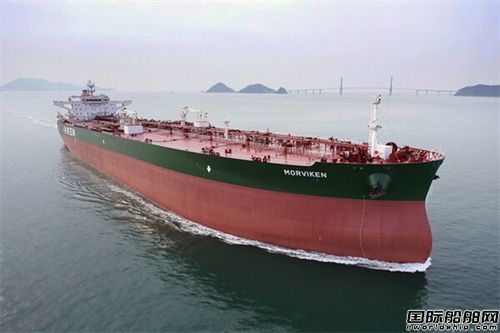
Recently, South Korea's Samsung Heavy Industries announced that it has signed construction contracts with shipowners from the Oceania region for two crude oil tankers, with the new vessels set to be delivered sequentially by May 2028.
The contracts for these two Suezmax crude oil tankers total 237.3 billion Korean won (approximately $169 million or 1.22 billion RMB), with each vessel costing around $84.5 million to build. For reference, according to Clarkson data, the current price of a newbuild Suezmax tanker weighing between 156,000 and 158,000 deadweight tons is about $85 million—representing a 6% decline from last year’s $90 million during the same period.
Samsung Heavy Industries did not disclose specific details about the shipowner in question. According to foreign media reports, the order came from Greek shipowner Adam Polemis. Earlier in September, it was reported that Adam Polemis had signed letters of intent with Samsung Heavy Industries for the construction of two additional Suezmax tankers—bringing the total to four vessels. The actual construction of the new ships will be handled by HSG Seongdong Shipbuilding (formerly Seongdong Shipbuilding).
This July, Samsung Heavy Industries signed a Strategic Business Agreement (MOU) titled "Building a Symbiotic Growth Model" with HSG Seongdong Shipbuilding and Kunhwa Company, officially launching the development of a collaborative ecosystem aimed at fostering mutual growth and synergy with South Korea's domestic small- and medium-sized shipbuilding partner companies (subcontractors).
According to the agreement, Samsung Heavy Industries will entrust HSG Seongdong Shipbuilding with the full-scale construction of oil tankers, and will collaborate with Kunhwa to manufacture large-scale sections for LNG carriers. Through this initiative, local small- and medium-sized shipbuilding enterprises will not only secure a stable workload but also gain opportunities to enhance their technological capabilities. Meanwhile, Samsung Heavy Industries will establish a mutually beneficial cooperative model that boosts competitiveness by improving engineering efficiency.
Through this collaboration, HSG Chengdong Shipbuilding is poised to make a comeback in the full-ship construction market. After delivering its last vessel from its existing order book in 2017, the shipyard has since focused on ship section fabrication and ship repair services.
Including the two new crude oil tanker orders recently secured, Samsung Heavy Industries has already booked 27 new ship orders this year, totaling $5 billion (approximately RMB 35.5 billion), achieving 51% of its annual order target of $9.8 billion. These 27 new ship orders comprise 7 LNG carriers, 9 shuttle tankers, 2 very large ethane carriers (VLEC), 6 crude oil tankers, 2 container ships, and a preliminary contract for one FLNG (Floating Liquefied Natural Gas Production, Storage, and Offloading) facility.
Among these, in the commercial shipping sector, Samsung Heavy Industries has already secured orders for 26 new vessels worth US$4.269 billion, achieving 73.6% of its annual target of US$5.8 billion. Meanwhile, in the offshore engineering field, following the signing of a preliminary US$700 million contract with an African shipowner in July this year for an FLNG project, the company is now advancing toward finalizing the formal contract. By year-end, it aims to secure an additional FLNG order, thereby meeting its overall target.
At the beginning of this year, Samsung Heavy Industries set its annual order target for shipbuilding and offshore business at $9.8 billion, a 33% increase from last year's actual order value of $7.3 billion.
A Samsung Heavy Industries official stated: "Given the high proportion of aging crude oil tankers, coupled with the International Maritime Organization's (IMO) tightened environmental regulations and the EU's carbon emission restrictions now in effect, we expect the demand for fleet renewal to continue expanding. As a result, the tanker market is poised to maintain its robust order momentum. With the successful securing of this additional order for crude oil tankers, we are accelerating our efforts to meet this year's order targets. Moving forward, the company will strengthen collaboration with partners both domestically and internationally, while remaining agile in responding to evolving global market conditions."
Samsung Heavy Industries stated that the company currently holds orders worth over $30 billion, ensuring more than three years of robust workload. Building on this solid order book, Samsung plans to continue prioritizing a selective order strategy focused on profitability as it moves into 2025. Beyond LNG carriers, the company is also expanding its portfolio by actively pursuing high-value-added vessel types such as shuttle tankers and Very Large Ethane Carriers (VLECs). While maintaining its strategic focus on selectively accepting high-margin shipbuilding projects, Samsung Heavy Industries will closely monitor market conditions for container ships and oil tankers, adapting flexibly to evolving global market dynamics. Additionally, the company is making concerted efforts to secure FLNG orders from countries like Mozambique, the United States, and Canada.
Samsung Heavy Industries aims to achieve a 6% operating profit margin by 2025 through "aggressive" order-acquisition efforts. In 2023, the company’s operating profit margin was 2.9%, rising to 5.1% in 2024.
Related News
Ministry of Foreign Trade
Fixed line:0553-2111515
E-mail (E-mail):licheng@wuhupa.com
Address: Xu Town Industrial Park, Wuhu City, Anhui Province
Public Number
Micro-blog
Tiktok
Copyright©2022 Wuhu Ping'an Rubber Co., Ltd. All Rights Reserved Website Construction:www.300.cn Nanjing SEO